Glendale Hardwood Floor Water Damage Repair
Hardwood floor water damage repair in Glendale often saves the floor when the leak is stopped fast and drying starts right away. Cupped boards wet with clean water can usually be dried and refinished. Buckled, rotted or sewage-soaked boards usually need replacing. Moisture readings under the floor, not looks alone, decide which path makes sense.
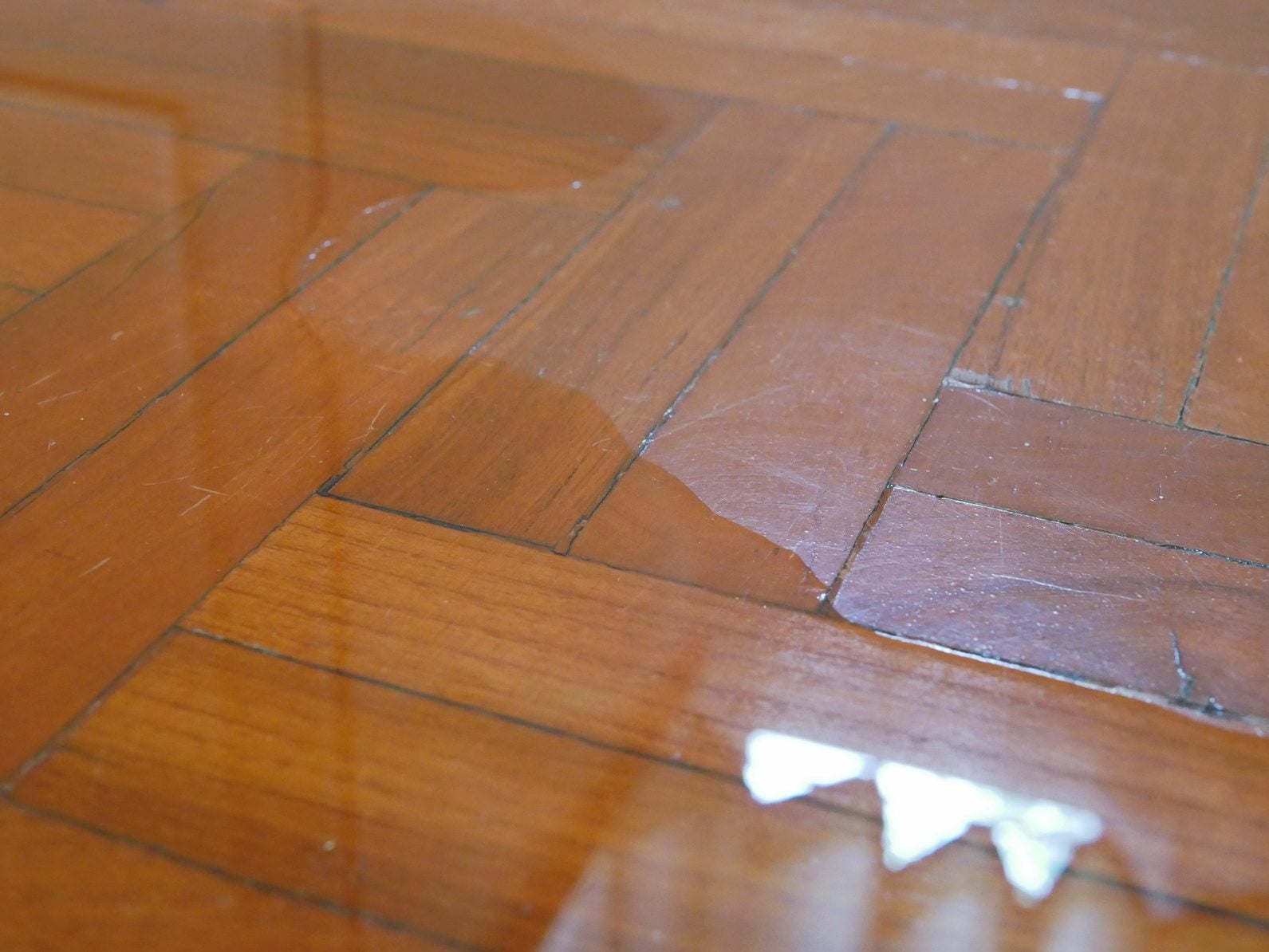
- Cupping is the mildest sign of water in hardwood and often improves once the floor is dried slowly.
- EPA says to dry water-damaged areas and items within 24-48 hours to prevent mold growth.
- Sanding a cupped floor before it fully dries can cause crowning later.
- Buckled boards, black stains and sewage or floodwater usually mean replacement.
- DIFI says to photograph damage first and verify coverage with your adjuster, not a contractor.
Can hardwood floor water damage repair save my floor in Glendale?
Often, yes. Hardwood floor water damage repair in Glendale can save many floors when the leak is stopped fast and drying starts right away. Boards that are buckled, soft, black-stained or soaked by sewage or floodwater usually need replacing.
The answer depends less on how the floor looks on day one and more on what a moisture meter finds under it.
What are the signs of water damage in a hardwood floor?
The main signs of water damage in a hardwood floor are cupping, crowning, buckling, dark stains, gaps between boards, a soft or spongy feel, and a musty smell. Any one of these after a leak in your Glendale home means moisture reached the wood and should be checked.
- Cupping: board edges rise higher than the centers, so the floor looks wavy.
- Crowning: the centers rise higher than the edges, often after a cupped floor was sanded too soon.
- Buckling: boards lift off the subfloor, sometimes by several inches.
- Dark or gray stains: water reacting with the wood, or water that sat a long time.
- Soft spots or squeaks: a wet or weakened subfloor.
What is the difference between cupping, crowning and buckling?
Cupping, crowning and buckling are three stages of the same problem: wood swelling with moisture. Cupping is the mildest and most often reversible. Crowning usually comes from sanding a floor before it dried. Buckling is the most severe and almost always means boards must come out.
Cupping happens when the bottom of each board is wetter than the top. The underside swells, pushing the edges up.
Crowning is the reverse shape. It often shows up when a cupped floor is sanded flat while still wet, then the edges shrink as the wood dries.
Buckling means the boards swelled so much that they pushed against each other and against the walls until they lifted off the subfloor. Buckled sections are rarely saved.
Need help now? Call to be connected with a local provider in Glendale who can check availability for your address.
Does solid hardwood hold up better than engineered wood after a leak?
Solid hardwood usually has more repair options than engineered wood after a leak, because it is thick enough to be sanded and refinished more than once. Engineered wood has a thin top layer over a plywood core, so swelling or delamination in the core often means replacement.
- Solid hardwood: can often be dried in place, then sanded and refinished. Individual boards can be woven out and replaced.
- Engineered hardwood: limited sanding depth. If the layers separate or the core swells, the affected planks usually need replacing.
- Laminate and wood-look products: the fiberboard core swells and does not shrink back, so wet planks are usually replaced.
When can a water-damaged wood floor be dried and refinished instead of replaced?
A water-damaged wood floor can usually be dried and refinished when the water was clean, drying started within a day or two, the boards are cupped but not buckled, and the subfloor is solid. In those cases, drying first and refinishing later often keeps the original floor.
EPA says it is important to dry water-damaged areas and items within 24-48 hours to prevent mold growth.
Providers typically dry wood floors with dehumidifiers, air movers and sometimes specialized drying mats that pull moisture up through the boards. Rushing to sand is the most common way a repairable floor becomes a replacement job. You can read more about structural drying and dehumidification.
When do hardwood floor boards need to be replaced?
Hardwood boards usually need to be replaced when they are buckled, cracked, delaminated, deeply stained black, soft from rot, or soaked by sewage or outside floodwater. Boards also come out when the subfloor under them is damaged or when mold has grown on the underside.
Replacement does not always mean the whole room. With solid hardwood, damaged boards can often be cut out and new boards woven in, then the area sanded and refinished so it blends.
The Arizona Department of Health Services says it is critical to remove the source of moisture first, before beginning cleanup, because mold will return if the area becomes re-wetted. For a broader look at this decision, see dry and restore vs. tear out and replace.
Why does the type of water matter for a wood floor?
The type of water matters because it decides whether wood can be safely dried and kept.
- Clean water: a burst supply line, ice maker line or water heater leak. Often dried in place if work starts quickly.
- Gray water: dishwasher or washing machine water, or clean water that sat and picked up contaminants.
- Black water: sewage backups and floodwater from outside. Wood flooring it touches is usually removed and the area sanitized.
If an appliance caused the leak, see appliance leak water damage cleanup.
What drives the cost of hardwood floor water damage repair?
The cost of hardwood floor water damage repair is driven by the size of the wet area, the floor type, the water source, how long the water sat, the condition of the subfloor, and whether boards can be dried or must be replaced and blended. An honest number only comes after an inspection.
The main cost drivers are:
- Wet area: one hallway versus water that ran under several rooms.
- Floor type: solid, engineered, floating or glued down.
- Drying needs: how many days of equipment and monitoring it takes.
- Subfloor condition: plywood, particle board or concrete slab, and whether it needs repair.
- Refinishing scope: a patch versus a full room for an even look.
The Arizona Department of Insurance and Financial Institutions (DIFI) says it is your right to get more than one quote.
What happens during the visit?
During the visit, a local provider inspects the floor, measures moisture in the wood and subfloor, explains your repair and replacement options, and gives you a written quote before any work begins.
- Inspection: the provider looks for the source, checks cupping, buckling and stains, and uses moisture meters to map how far the water spread.
- Options explained: they explain whether the floor can likely be dried in place, which boards may need to come out, and what refinishing could look like.
- Written quote: you get a written quote that describes the scope before work starts.
DIFI advises taking pictures of the damage before any water mitigation, plumbers or restoration contractors show up, and calling your insurance company or adjuster before calling a contractor. Call to be connected with a local provider who can inspect your floor.
Hardwood floors and water damage in Glendale and the West Valley
Most wood floor water damage in Glendale starts inside the home, from plumbing and appliances. The City of Glendale says hard water can lead to scaling in pipes, water heaters and plumbing fixtures like faucets and showerheads. In Sun City, EPCOR's 2025 Water Quality Report says hardness ranges from 7 to 11 grains per gallon.
Storms add another risk. The National Weather Service defines the monsoon as June 15 through September 30 and says flash floods are common in Arizona. During the October 9-13, 2025 event, NWS Phoenix issued 25 Flash Flood Warnings and 16 Flood Warnings across its forecast area, which includes the West Valley.
Indoor humidity also affects wood. University of Arizona Cooperative Extension explains that evaporative coolers send cooled and humidified air into the living space. EPA advises keeping indoor relative humidity below 60 percent, ideally between 30 and 50 percent. Phoenix averages 111 days per year of 100°F or higher, so air conditioners run hard, and EPA advises keeping AC drip pans clean and drain lines flowing properly. Homes in Peoria, Surprise, Goodyear and Avondale face the same mix of leaks, storms and heat. See all service areas near Glendale.
Related pages
Questions people ask
Can hardwood floor water damage be repaired, or do I have to replace the whole floor?
Many hardwood floors can be repaired if the leak is stopped and drying starts quickly. Usually only boards that are buckled, rotted or soaked by sewage or floodwater need replacing.
Is hardwood floor repair after water damage worth it, or should I just replace it?
Repair is often worth it for solid hardwood that was wet with clean water and dried promptly. Replacing makes more sense when boards are buckled, the subfloor is damaged, or the water was contaminated.
How do I know if my hardwood floor has water damage under it?
Look for cupped or raised edges, dark stains, gaps, soft spots, a lifting finish or a musty smell. A moisture meter is the only reliable way to know how wet the wood and subfloor are.
Will cupped hardwood floors go back to normal on their own?
Cupped boards often flatten a lot once the moisture source is removed and the floor dries slowly. They may not return completely flat, and some floors still need light sanding and refinishing after drying.
Should I sand my cupped wood floor right away?
No. Sanding a cupped floor before it fully dries can cause crowning later, so wait until moisture readings are back to normal.
What should I do first if water gets on my hardwood floor in Glendale?
Stop the water, then soak up standing water right away. Close the fixture valve or main shut-off if safe, move rugs and furniture off the floor, take photos, and keep air moving unless the water is sewage.
Can mold grow under a hardwood floor after a leak?
Yes, mold can grow under wood floors if the subfloor stays wet. EPA says to dry water-damaged areas within 24-48 hours to prevent mold growth, so fast drying is important.
Why is my hardwood floor buckling after a dishwasher leak?
Buckling means the boards absorbed so much water that they swelled and lifted off the subfloor. Dishwasher leaks often run under cabinets unseen for days, which gives the wood time to swell.
Can they replace just a few damaged hardwood boards?
Often, yes, especially with solid hardwood. Damaged boards can be cut out and new ones woven in, then the area refinished so it blends with the rest of the floor.
What affects the cost of hardwood floor water damage repair in Glendale?
The cost depends on the wet area, floor type, water source, drying time, subfloor condition and how much refinishing is needed to blend repairs. A written quote after an inspection is the only reliable way to know.
Does homeowners insurance cover water-damaged hardwood floors in Arizona?
It depends on your policy and the cause. DIFI says water damage not caused by a flood may be covered if it results from a sudden or accidental event, so check your policy and verify with your adjuster.
Should I call my insurance company before a floor repair company?
Yes. DIFI advises calling your insurance company or adjuster before calling a contractor, and taking photos of the damage before any mitigation or restoration work starts.
Does the subfloor need to be replaced when hardwood gets wet?
Not always. A plywood subfloor can often be dried if caught early, but particle board or a subfloor that stayed wet for a long time may swell, weaken and need replacing.
Can a swamp cooler make my hardwood floor cup in Glendale?
Evaporative coolers add humidity to indoor air, and wood reacts to moisture. If you notice cupping and no leak, check indoor humidity; EPA advises keeping it below 60 percent, ideally 30 to 50 percent.
How do I find someone for hardwood floor water damage repair near me in Glendale?
Call the number on this page to be connected with a local water damage provider who can inspect the floor. DIFI advises making sure any contractor is licensed in Arizona and notes your right to get more than one quote.
Talk to someone about your water damage problem
Call to be connected with a local provider who can check availability for your address and explain the next step.